
Dizziness and unsteadiness can be frightening. The world feels slightly “off”, your balance can’t be trusted, and you might start avoiding busy places, quick turns or crowded shops. Often, people have been through the GP, medication and balance exercises, and still feel something is going on.
At Roots Chiropractic in Horsham, we don’t treat dizziness or any medical condition. What we do is look at the upper neck, which plays a surprisingly big part in how your nervous system works out where you are in space.
Balance is an entire system
Your sense of balance depends on three main sources of information being matched up by the brain:
- The inner ear (vestibular system), which detects head movement and acceleration
- The eyes, which tell you what’s around you
- The body (proprioception), especially from the muscles and joints of the neck and spine
- Interoception (internal sense)
Think of 4 compasses. When they all point the same way, you walk confidently. When one points somewhere different then confusion ensues.Think of 4 compasses. When they all point the same way, you walk confidently. When one points somewhere different then confusion ensues.
Why the upper neck is so important
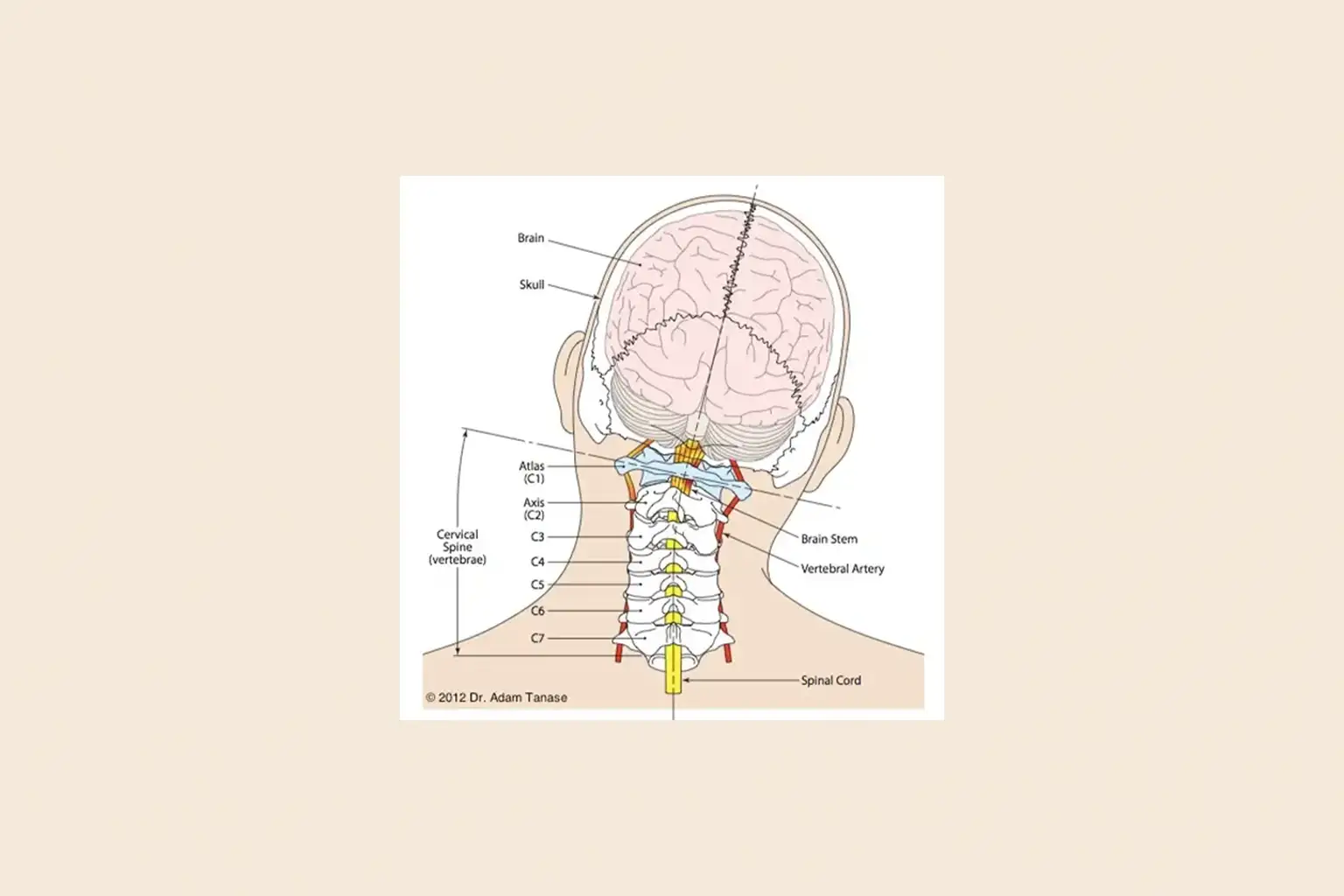
The top of the neck, the base of the skull, C1 and C2, is one of the most sensory-rich regions in the body. The small suboccipital muscles beneath the skull are packed with receptors that report head position to the brain, and they’re closely connected with the systems controlling eye movement and balance.
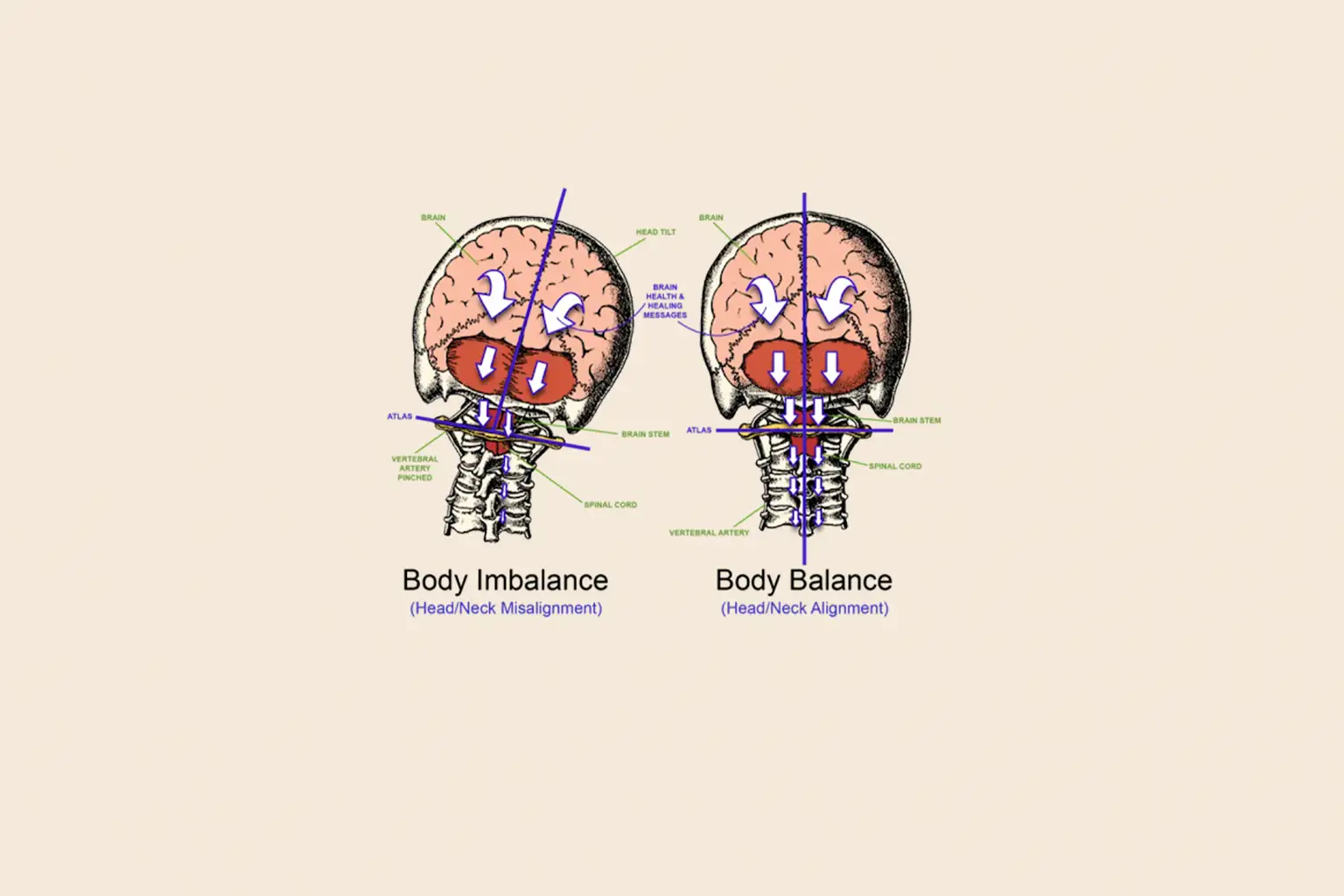
When this region isn’t moving or functioning well, the information it sends can be distorted or unclear, and the brain can struggle to match it with what the eyes and inner ear are saying. In the research literature, this is sometimes described as cervicogenic dizziness. This is an area where research is still evolving.
Unclear neck signal → Sensory mismatch → Feeling off-balance or “floaty”
What people may notice
People who come to us with these experiences often describe:
- Feeling unsteady, wobbly or “off”, especially on turning the head
- Eyes that tire easily, or blurry vision with head movement
- Neck tension, headaches or tightness at the base of the skull
- A feeling of being disconnected from their body
- Feeling worse after long periods on screens or in a car
- Fatigue and a feeling of being “on edge”
Why Upper Cervical care?
Our chiropractor is trained in Upper Cervical Specific care, a focus on the precise function of the top of the spine and its relationship with the skull. The approach is specific rather than general: we want to identify exactly which part of the upper neck isn’t functioning well and support it with a gentle, targeted adjustment. Our aim isn’t to treat dizziness. It’s to support the function of the nervous system, so that the signals the brain receives from the neck are clearer. Many practice members report feeling more grounded and steadier as a by-product.
What to expect at Roots
- We listen: previous falls, whiplash, head injuries, sports knocks, stress and what your day looks like
- Global Tonal Assessment: how tone is organised across your whole body
- Integrated Specific Spinal Assessment: where the spine and upper neck aren’t functioning well
- Insight Scans (HRV, thermography and sEMG): objective measures of how your nervous system is doing, so progress is tracked
Frequently asked questions
Can chiropractic help dizziness?
We don’t treat dizziness. Many people with these experiences come to us after trying other things, and practice members often report feeling steadier. We support the spine and nervous system, and we’ll work alongside your GP or specialists.
Is it safe to have my neck adjusted?
Care is gentle and specific, and we take a full history first. We’ll talk through anything relevant to you before we start.
The bigger picture
We recognise that the body is intelligent and capable of regulating and adapting when it’s functioning as it should. For dizziness and unsteadiness, the upper neck is one of the most important places to look.
If you’d like to explore this, book a consultation at Roots Chiropractic in Horsham. Please reach out. I’m here to help.
Kindest,
Morgan
Sources
- Treleaven, J. (2008) Sensorimotor disturbances in neck disorders affecting postural stability, head and eye movement control. Manual Therapy, 13(1), pp. 2-11.
- Sung, Y.-H. (2022) Suboccipital muscles, forward head posture, and cervicogenic dizziness. Medicina, 58(12), p. 1791.