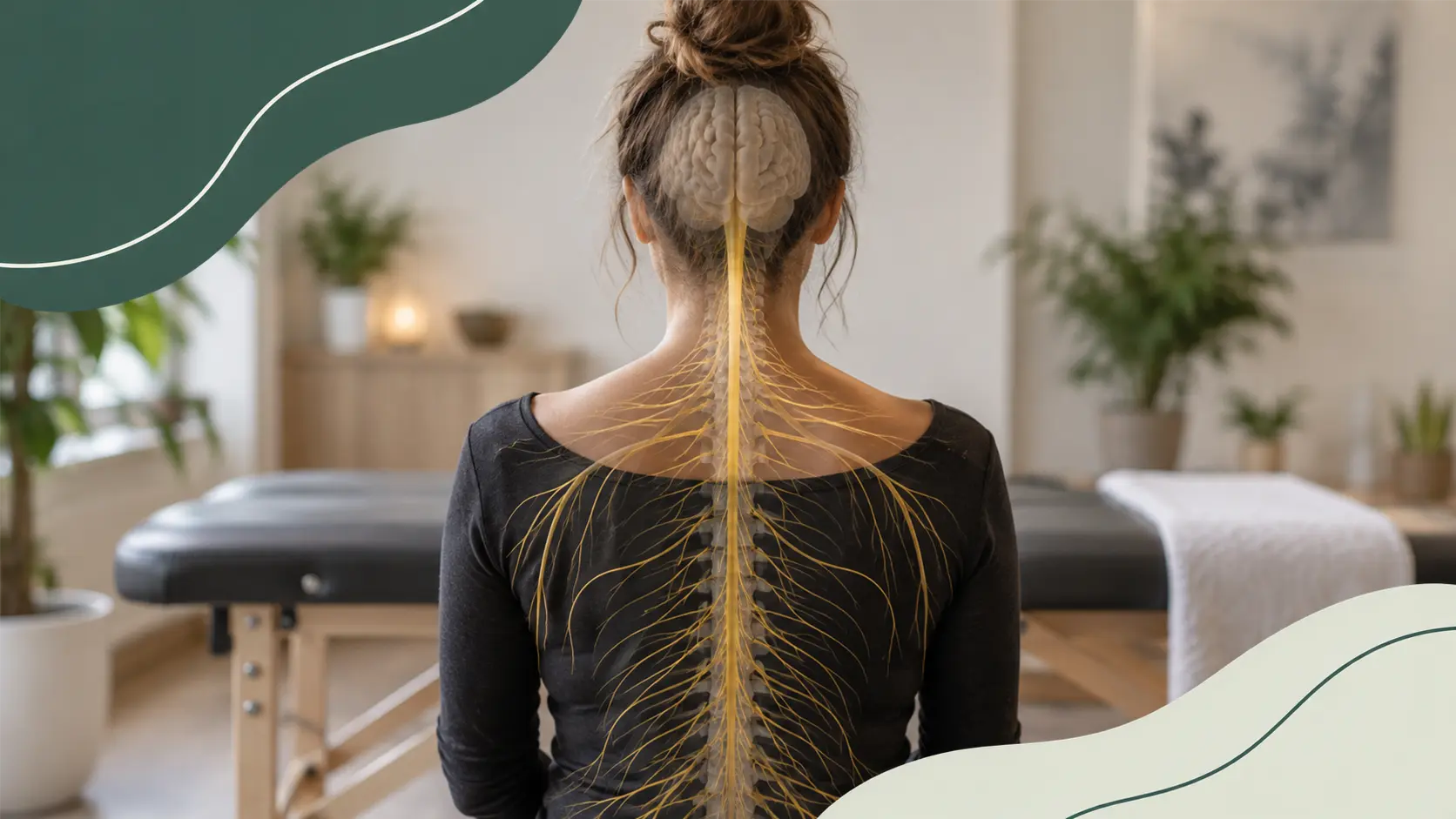

Understanding the modern stress pattern, so many people quietly live with
You fall into bed exhausted. Your body feels heavy, your eyes burn, and you know you need sleep.
But your mind does not agree.
Thoughts keep looping. Your jaw feels tight. Your shoulders hover somewhere near your ears. You are drained and alert at the same time.
By morning, you wake up foggy yet restless, reaching for caffeine to get moving. The cycle repeats.
If this sounds familiar, you are not alone. Many people describe this exact paradox as feeling “wired but tired.” It is not a medical diagnosis. It is a pattern. And it has become remarkably common in modern life.
What Does “Wired but Tired” Really Mean?
The phrase captures a mismatch between mental activation and physical energy. The body feels depleted, yet the nervous system behaves as though something still requires attention.
In simple terms, the system that keeps us alert and responsive remains switched on longer than it needs to. The body is designed to activate during stress, then return to baseline once the challenge passes. When that reset does not happen smoothly, tension lingers.
You may not be facing a crisis. Yet your physiology acts as if you are constantly preparing for one.
A Brief Look at the Stress Response
The human stress response is not a flaw. It is protective. When the brain perceives a threat, it signals the release of hormones such as adrenaline and cortisol. Heart rate increases. Muscles tighten. Breathing quickens. Attention sharpens.
This is often described as the fight or flight response.
Once the challenge resolves, another branch of the nervous system helps the body recover. Heart rate slows. Muscles soften. Digestion resumes. This is sometimes called the rest and digest state.
The system works beautifully when stress is short-lived. The difficulty arises when activation becomes prolonged. Research on stress physiology, including work by McEwen, describes how repeated activation without adequate recovery can increase cumulative strain on the body. Bruce McEwen
Stress itself is not the problem. Duration is.
Why Modern Life Keeps the System Switched On
Unlike our ancestors, most of us are not running from predators. Yet the nervous system does not distinguish well between physical danger and psychological demand.
Emails. Notifications. Deadlines. Financial pressure. News cycles. Social comparison. Late-night screen exposure. These inputs may seem minor in isolation, but together they create ongoing stimulation.
Many people spend hours sitting still while their minds process constant information. The body remains physically restrained but mentally active. This mismatch can sustain low-level alertness long after the workday ends.
Sleep schedules shift. Natural light exposure decreases. Evening screen use can delay melatonin production, making it harder to downshift at night. Research into sleep science, popularised by authors such as Matthew Walker, highlights how sensitive the sleep cycle is to light and timing.
The result is a nervous system that struggles to power down.
The Physical Side of Mental Stress
Stress rarely stays in the mind alone. It shows up in the body.
Notice what happens when you feel under pressure. Shoulders lift. Breathing becomes shallow. The jaw tightens. The neck stiffens. These patterns can become habitual when stress is frequent.
Prolonged sitting adds another layer. Limited spinal movement and forward head posture may reinforce shallow breathing and muscular tension. This does not mean posture causes anxiety. It does suggest that physical habits can mirror internal states.
Over time, the body can become efficient at holding tension. It learns the posture of alertness.
When the environment quiets, the body may need deliberate signals that it is safe to relax.
More Reading: “Chiropractic care and chronic fatigue: Understanding the nervous system behind the experience”
Why Rest Feels Harder Than It Used To
Many people assume exhaustion automatically leads to deep sleep. Yet when the nervous system remains activated, fatigue and rest do not align.
You may feel drained yet mentally restless. You may lie down but struggle to settle. Even if you fall asleep, recovery can feel incomplete.
This is not a personal failure. It reflects the balance between activation and recovery. If the alert system is repeatedly stimulated during the day, it may take longer to transition into restorative states at night.
The body is adaptive. It responds to patterns. When stimulation dominates, recovery requires intention.
Supporting Regulation in a Busy World
The good news is that small shifts can influence this balance over time.
Regular movement variety can help. Walking outdoors, gentle stretching, or mobility exercises introduce physical signals of safety and rhythm. Consistent sleep timing supports circadian alignment. Limiting intense screen exposure in the hour before bed may ease the transition to sleep.
Breathing awareness is another simple tool. Slow, steady breathing can encourage parasympathetic activation. It does not eliminate stress, but it can help the body shift gears.
Manual therapies, including chiropractic care, sometimes play a supportive role for individuals who carry persistent muscular tension. By focusing on joint mobility and mechanical load, care may encourage greater physical ease. It is not a treatment for stress disorders. Rather, it can complement broader lifestyle strategies aimed at improving movement and comfort.
Regulation rarely comes from one dramatic intervention. It builds through consistent habits.
A Chiropractic Perspective on Nervous System Balance
From a chiropractic viewpoint, the spine is central to how the body moves and adapts. When joints move efficiently, mechanical strain may be reduced. Improved mobility can make daily tasks feel less effortful.
Some people notice that when their posture improves and muscular tension decreases, they feel generally calmer. This does not mean spinal care directly treats anxiety or fatigue. It suggests that physical comfort and nervous system regulation are interconnected.
Care remains conservative and individualised. It supports awareness, mobility, and mechanical balance within the broader context of healthy routines.
You Are Not Broken
Feeling wired but tired does not mean something is fundamentally wrong with you. It reflects the environment you live in.
Modern life delivers constant input. Your nervous system is doing its best to keep up.
The aim is not to eliminate stress. It is to respect recovery. Small changes compound. Gentle awareness of posture, breathing, light exposure, and sleep timing can gradually shift the balance.
The body was designed to adapt. With the right signals, it can relearn how to power down as effectively as it powers up.
References
- Bruce McEwen. Protective and damaging effects of stress mediators. New England Journal of Medicine.
- Robert Sapolsky. Why Zebras Don’t Get Ulcers.
- National Institute of Mental Health. Stress Overview.
- Matthew Walker. Why We Sleep.
- Thayer JF, Lane RD. A model of neurovisceral integration in emotion regulation. Journal of Affective Disorders.