
It Sounds Complex, But It Is Not
The term cranio-spinal system can sound a bit intimidating at first. It feels like something you might have skipped over in a school textbook. But when you break it down, it is actually quite simple. And more importantly, it is very relevant to how your body feels every day.
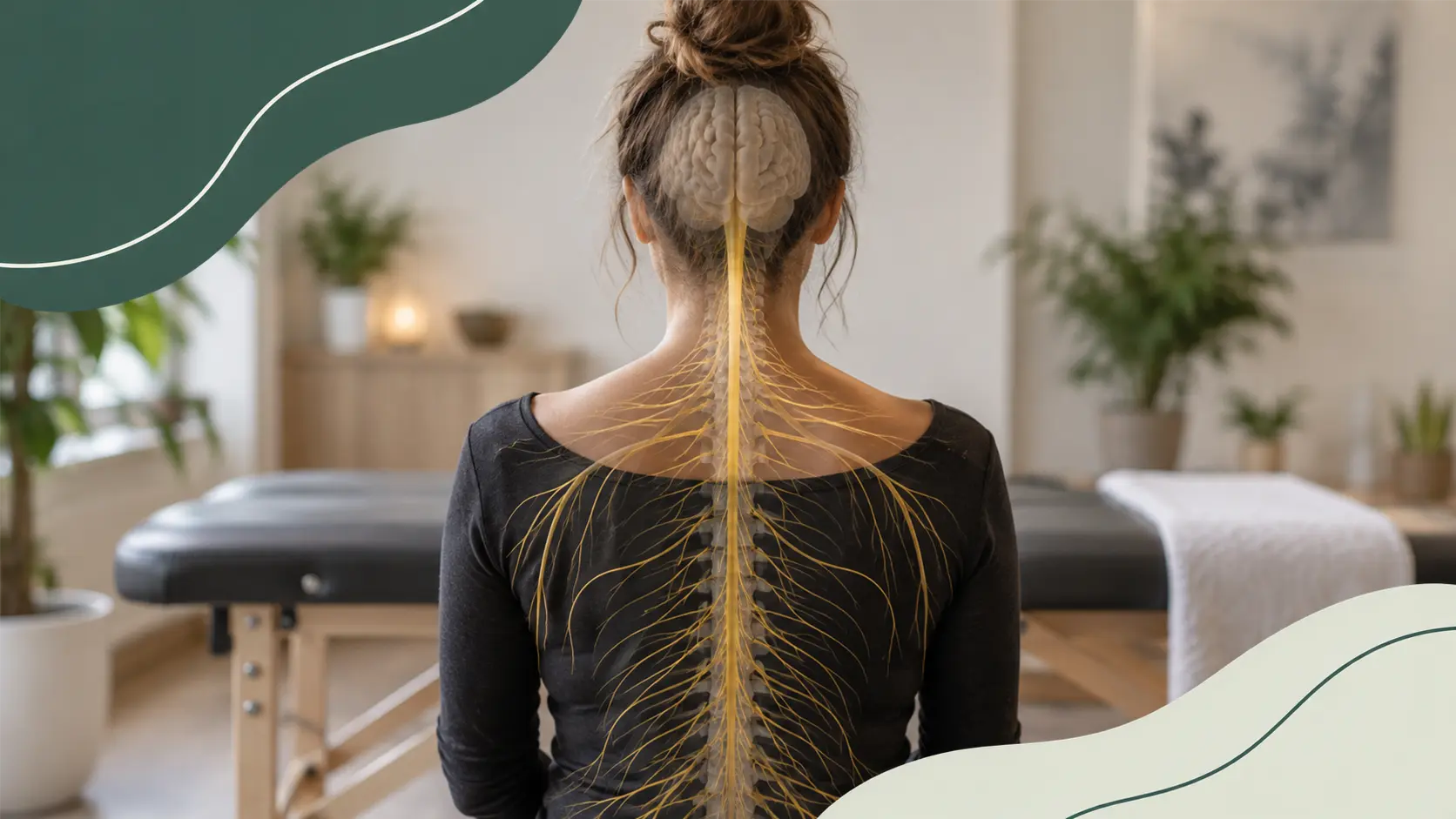
In the simplest terms, the cranio-spinal system is the connection between your brain, your spine, and your nervous system. It is how your body sends messages, responds to movement, and keeps everything working together.
You do not have to think about it most of the time. It just works in the background. But understanding it, even a little, can help you make sense of things like posture, movement, and why your body sometimes feels a bit off.
What Is the Cranio-Spinal System?
Let’s slow it down and keep it simple.
When people ask what the craniospinal system is, the answer is this:
It is the relationship between:
- The skull, which protects the brain
- The spine, which supports the body
- The nervous system, which carries messages
These parts work together as one system. Not separate pieces, but a connected network.
Think of it like a railway system. The brain is the main station. The spine is the track. And the nerves are the trains carrying information back and forth.
If everything is running smoothly, messages travel easily. Movement feels natural. The body responds as it should.
Why This System Matters in Everyday Life
You might be wondering why the cranio-spinal system matters if you are not studying anatomy.
The reason is simple. This system influences almost everything your body does.
It plays a role in:
- Movement
- Posture
- Coordination
- Muscle tension
- How you respond to stress
Even small things like turning your head or sitting comfortably involve this system.
It is a bit like the wiring in a house. You do not see it, but it powers everything. When it works well, you do not notice it. When something is off, you start to feel the effects.
How the Spine and Nervous System Work Together
Understanding how the spine and nervous system work together is key to making sense of the bigger picture.
The brain sends messages through the spinal cord, which runs through the centre of the spine. From there, nerves branch out to different parts of the body.
These messages control movement, sensation, and even automatic functions like breathing.
It is a constant flow of information. Back and forth, all day.
If the spine is moving well and is well-balanced, these signals can travel more easily. If there is restriction or tension, it may affect how smoothly those signals are processed.
Not in a dramatic way. More in a subtle, gradual sense.
The Role of the Skull
The skull is often overlooked in this conversation, but it is an important part of the cranio-spinal system.
It protects the brain and connects directly to the top of the spine. The way the head sits on the neck can influence posture and movement.
For example, if the head shifts slightly forward, which often happens with screen use, it can place extra strain on the neck and upper back.
This does not happen overnight. It builds over time.
It is a bit like leaning slightly forward while standing on a train. You might not notice it at first, but after a while, it becomes uncomfortable.
Everyday Habits and Their Impact
Here is where things get very practical.
Your daily habits have a direct effect on the cranio-spinal system.
Think about:
- Sitting at a desk for long periods
- Looking down at your phone
- Driving or commuting
- Sleeping positions
None of these are inherently bad. But repetition matters.
Over time, the body adapts to what it does most often. This can influence posture, movement, and how the system functions as a whole.
You might not notice it straight away. But eventually, you might feel stiffness, tension, or reduced movement.
A Simple Analogy to Make It Clear
Imagine a set of headphones.
If the cable is straight and untangled, the sound comes through clearly. But if the cable is twisted or pulled tight in certain places, the sound might still come through, just not as smoothly.
The cranio-spinal system works in a similar way. It is not about perfection. It is about ease and flow.
When everything is aligned and moving well, communication feels smoother.
Why Small Changes Make a Difference
One of the most reassuring things about the cranio-spinal system is that it is adaptable.
Just as daily habits can influence it in one direction, they can also support it in a positive way.
Simple changes can help:
- Moving regularly throughout the day
- Adjusting how you sit or work
- Taking breaks from screens
- Being aware of posture
These are not dramatic changes. But they add up.
A bit like making a cup of tea properly. It is not complicated, but small details make a difference.
A Quick Thought About Modern Life
It is fair to say that modern life is not always ideal for this system.
Long hours sitting, constant screen use, and busy routines all place demands on the body.
It is not about avoiding these things completely. That would not be realistic. It is more about balancing them.
A bit more movement here, a bit more awareness there.
It sounds simple, and in many ways it is. But simple things, done consistently, tend to work.
Where Chiropractic Care Fits In
Chiropractic care focuses on supporting the cranio-spinal system by improving how the spine moves and functions.
The aim is not to force the body into a position, but to help restore more natural movement and balance.
When the spine and joints move more freely, it can support how the nervous system functions.
This is not about instant fixes. It is about gradual improvement and supporting the body over time.
Internal Links for Further Reading
To explore related topics:
- Understanding structure and function
- How movement supports comfort
- The impact of daily habits on the body
External References
For further information:
- National Health Service https://www.nhs.uk/conditions/
- Brain and Spine Foundation https://www.brainandspine.org.uk/
FAQ: Cranio-Spinal System
What is the craniospinal system in simple terms?
It is the connection between the brain, spine, and nervous system that allows the body to send and receive messages.
Why is the cranio-spinal system important?
It plays a key role in movement, posture, and overall body function.
How do the spine and nervous system work together?
The spine protects the spinal cord, which carries messages between the brain and the rest of the body.
Can daily habits affect this system?
Yes, posture, movement, and lifestyle habits can influence how the system functions over time.