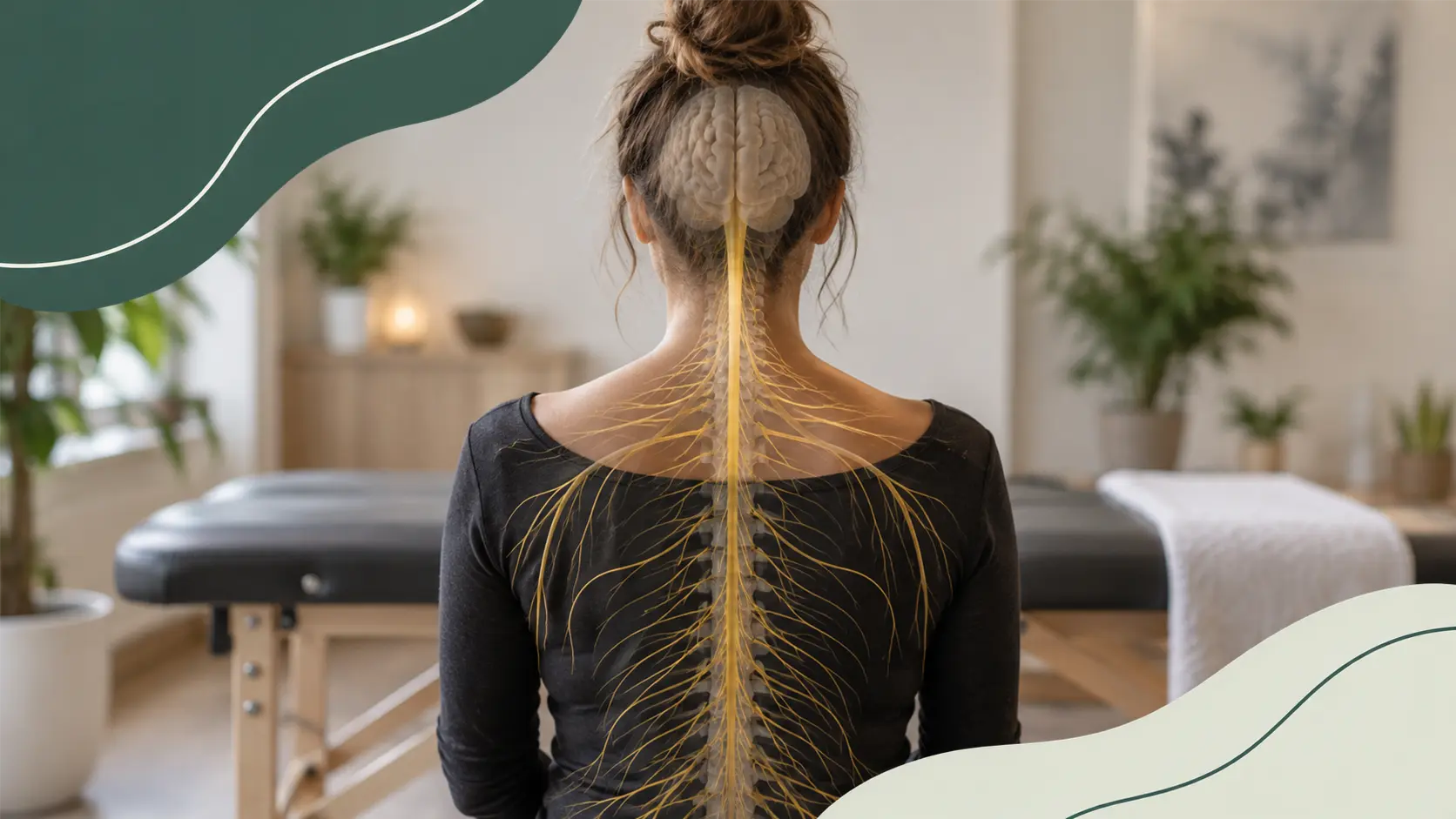

If you have ever visited a chiropractor, you may have heard them mention the nervous system and wondered what that actually means for you or your family. It can sound technical. Slightly abstract. Almost like something reserved for textbooks rather than everyday life.
Here’s the thing. When chiropractors talk about the nervous system, they are not pointing to a condition or a problem to be fixed. They are talking about how the body communicates, adapts, and stays organised as you move through the world. That idea sits at the heart of chiropractic thinking.
This article aims to explain that perspective in plain language, without medical jargon, and without promises. Just context.
A simple way to understand the nervous system
At its most basic level, the nervous system is the body’s communication network. It allows different parts of the body to stay in touch with one another, moment by moment, without you having to consciously think about it.
The brain serves as the coordinator. The spinal cord acts as a central pathway. The nerves branch out to muscles, joints, organs, and tissues, carrying information back and forth all day long.
You might think of it like a transport system. When traffic flows smoothly, everything arrives where it needs to go with less effort. When routes are congested or under constant strain, things still function, but often with more work involved.
From a chiropractic point of view, the nervous system helps the body organise movement, posture, balance, and internal regulation automatically. It does not need instruction. It responds to input.
Why the spine matters in this conversation
Chiropractors pay close attention to the spine because of its close relationship with the nervous system. The spinal cord runs through it. Nerves exit from it. Movement happens around it.
This does not mean the spine causes disease, or that every ache starts there. It simply means the spine is a key structural area involved in how the body moves and adapts.
The spine is designed to move. When it moves well, the body often feels more at ease. When movement becomes restricted or patterns become inefficient, the body may need to work harder to maintain balance and coordination.
Chiropractic care observes these patterns. It does not assume pathology. It looks at how the structure is functioning and how comfortably it supports everyday demands.
Posture, movement, and modern life
Most people do not develop movement habits intentionally. They develop them by living.
Long hours sitting. Screens held at eye level or below. Stress is carried in the shoulders, jaws, or lower back. These patterns are not inherently bad. They are simply repeated.
Over time, repeated patterns can place extra demand on the body’s ability to adapt. Not because the body is weak, but because it is constantly responding.
From a chiropractic perspective, this ongoing demand matters. The nervous system is always receiving information from the body about position, movement, and tension. When those inputs are consistent and balanced, the system tends to respond efficiently. When they are inconsistent or overloaded, the body may need to compensate.
This is not about damage. It is about load.
Support rather than treatment
One of the most important distinctions to make is what chiropractic care does not aim to do.
Chiropractic does not diagnose medical conditions. It does not claim to cure illness. It does not replace medical care.
Instead, it offers a conservative approach that focuses on supporting how the body functions, particularly in relation to movement and posture. Chiropractors observe how someone moves, how their spine behaves under everyday loads, and how their body responds over time.
Care is tailored. Techniques are adapted. The goal is not correction, but support. Encouraging ease of movement. Maintaining mobility. Helping the body work with less strain.
That distinction matters, especially when conversations about health can feel overwhelming.
Why families often find this perspective helpful
Families experience stress collectively, even if it shows up differently in each person.
Children carry school demands, growth changes, and screen time. Adults manage work pressures and responsibilities. Older family members navigate changes in balance, strength, or confidence.
A nervous-system-focused perspective does not separate these experiences into problems. It looks at how each body is adapting to its own environment and stage of life.
Many families appreciate this approach because it feels steady. It does not rush to label. It does not promise outcomes. It supports awareness and long-term wellbeing.
Maintaining mobility, confidence in movement, and ease of daily activity helps families stay connected. Walks remain walks. Play stays playful. Independence is preserved where possible.
Chiropractic as part of a broader picture
It is worth noting that chiropractic care is not a standalone solution to everything. It works best as part of a wider health picture.
Medical care, exercise, nutrition, rest, and social connection all play roles in well-being. Chiropractic fits alongside these, not above them.
Its contribution lies in helping people better understand how their bodies move and respond. Sometimes that awareness alone changes how someone approaches their day.
Less force. More ease. Fewer compensations.
A grounded way to think about the nervous system
When chiropractors talk about the nervous system, they are not talking about fear or fragility. They are talking about capacity.
The body is designed to adapt. To respond. To self-regulate within limits. Chiropractic care respects that design rather than trying to override it.
By paying attention to spinal movement and posture, chiropractors aim to support the body’s natural organisation, not control it.
That idea can feel reassuring, especially in a world full of quick fixes and bold claims.
An invitation, not a promise
If you are curious about how chiropractic care approaches the nervous system, you are welcome to explore it through conversation.
Many families choose to attend an initial consultation together. Not because something is wrong, but because understanding how the body works often feels easier when shared.
Chiropractic care offers space to ask questions, notice patterns, and make informed choices. Nothing more. Nothing less.
References and further reading
- World Health Organisation. Neurological disorders: public health challenges.
- National Institute of Neurological Disorders and Stroke (NINDS). Brain Basics: Know Your Brain.
- UK General Chiropractic Council. Standards of Practice and Code of Ethics.
- American Chiropractic Association. The Nervous System and Chiropractic Care.
- Guyton AC, Hall JE. Textbook of Medical Physiology.